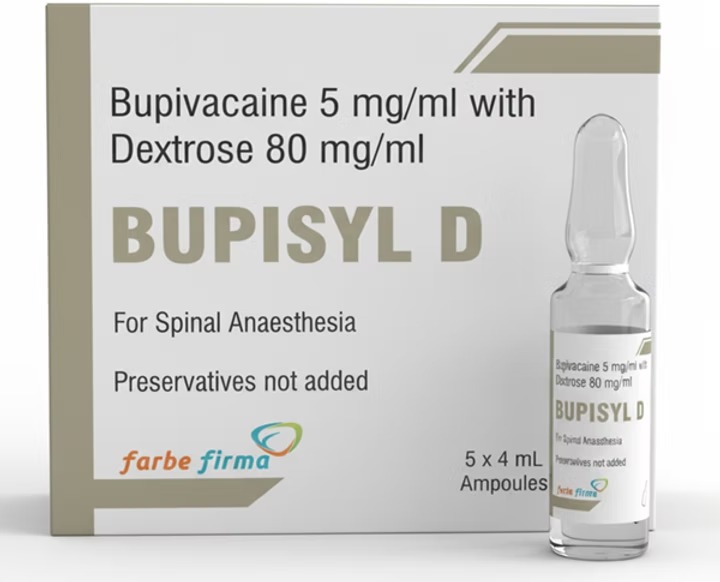
What is Bupivacaine Dextrose Injection?
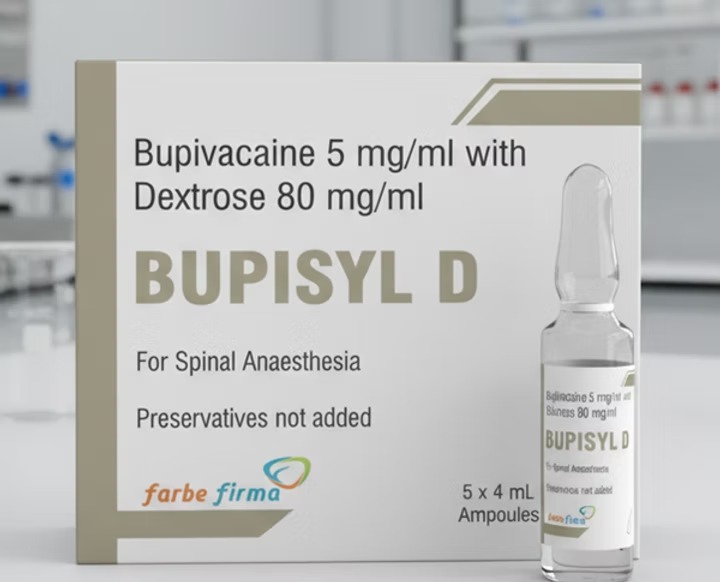
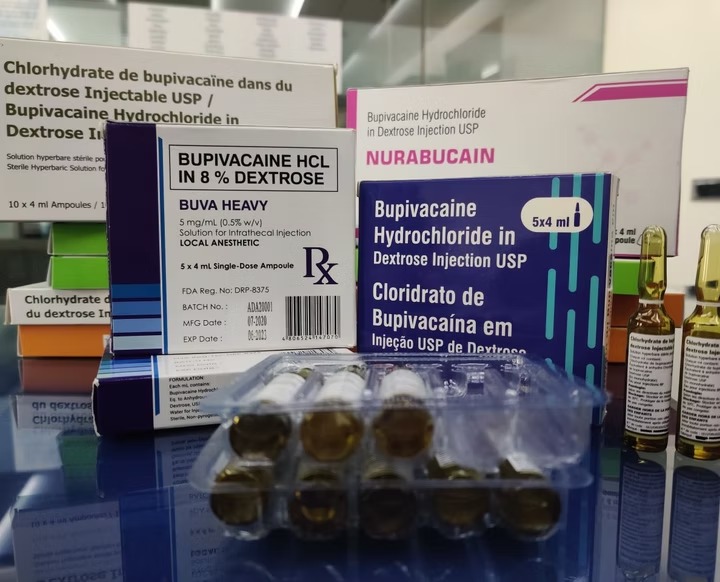
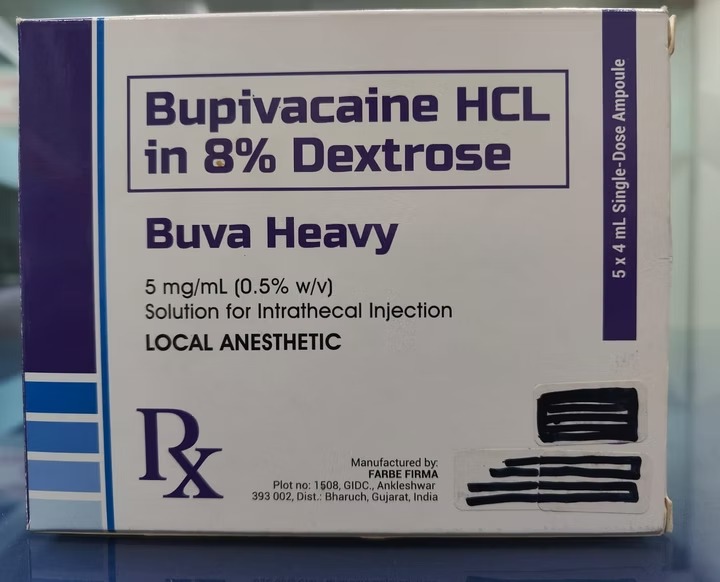
Bupivacaine Dextrose Injection is a sterile injectable solution combining Bupivacaine, a long-acting local anesthetic, with dextrose to provide hyperbaric spinal anesthesia used primarily in surgeries requiring regional anesthesia.
Uses of Bupivacaine Dextrose Injection
- Spinal anesthesia during lower abdominal, pelvic, and lower limb surgeries
- Used in caesarean sections for labor analgesia
- Provides effective regional anesthesia for orthopedic and urological procedures
- Used in diagnostic procedures requiring nerve block
How Does Bupivacaine Dextrose Injection Work?
Bupivacaine blocks sodium channels in nerve cells, preventing nerve signal transmission and causing numbness in targeted areas. The addition of dextrose increases the solution’s density (hyperbaric), allowing it to settle under gravity and provide predictable anesthesia spread in spinal blocks.
Common Side Effects of Bupivacaine Dextrose Injection
- ypotension
- Bradycardia
- Headache (post-dural puncture headache)
- Nausea and vomiting
- Injection site pain or irritation
- Rare allergic reactions
Why Choose Farbe Firma for Bupivacaine Dextrose Injection?
WHO-GMP Certified Injectable Manufacturing Facility
Manufactured under strict GMP standards with state-of-the-art sterile production lines ensuring safety and quality.
Flexible Packaging & Custom Solutions
Available in multiple vial and ampoule sizes with private labeling and contract manufacturing options.
Full Regulatory & Export Support
Comprehensive dossiers including COA, MSDS, stability data, and Free Sale Certificates to aid global registration.
Global Export Network
Serving clients in 30+ countries across Africa, Asia-Pacific, CIS, and Latin America.
Contract Manufacturing & Private Label Services
Low MOQ and tailored production solutions to fit your business needs.
FAQs on Bupivacaine Dextrose Injection
Q1: What is Bupivacaine Dextrose Injection used for?
Primarily used for spinal anesthesia during surgeries, including cesarean sections, orthopedic, and urological procedures.
Q2: How is Bupivacaine Dextrose Injection administered?
Administered by intrathecal injection (spinal block) by trained medical professionals.
Q3: What is the shelf life?
Typically 24 to 36 months when stored under recommended conditions.
Q4: Are samples and regulatory dossiers available?
Yes, samples and full regulatory documentation are available upon request.
Looking for a Reliable Bupivacaine Dextrose Injection Manufacturer & Exporter?
Partner with Farbe Firma for WHO-GMP certified Bupivacaine Dextrose Injection with full regulatory compliance and global export expertise.
- Certified sterile manufacturing
- Flexible packaging & private label options
- Exporting to 30+ countries worldwide
Contact us today for quotations, dossiers, or sample requests.